

CG Policy · 2025
In this section7 topics
Corporate Governance Policy
Has a Corporate Governance Policy
Yes
Policy Description
The Board of Directors places great importance on good corporate governance and is committed to ensuring that the Company conducts its business in accordance with sound governance principles. This commitment aims to foster sustainable long-term business growth and promote transparency. These principles not only enhance confidence among shareholders, investors, and all stakeholders but also contribute to sustainable value creation and strong business performance.
The Company has adopted the Corporate Governance Code for Listed Companies 2017 issued by the Securities and Exchange Commission (SEC) as a guideline to elevate its operational standards. This ensures clarity in standardized practices, enhances knowledge and understanding, and promotes a strong corporate governance culture within the Company and across the Group, ultimately leading to sustainable business operations.
The Company’s Corporate Governance Policy consists of eight key principles, summarized as follows:
Principle 1 Roles and Responsibilities of the Board of Directors as the Leader of the Organization in Creating Sustainable Business Value
The Board of Directors understands and realizes their roles and responsibilities in their capacity as the leader who must supervise the Company to ensure good corporate governance, which covers (1) setting objectives and targets, (2) determining strategies, operating policy, as well as allocating significant resources to achieve the objectives and targets, and (3) monitoring, evaluating and supervising the reporting on the Company’s performance in this regard.
The Board of Directors has the following policies on corporate governance to create sustainable value of business which will then enable the Company to achieve its business targets.
The Board of Directors has an obligation to supervise directors and executives to perform their obligations with accountability and responsibility, duty of care, and duty of loyalty for the best interest of the Company, as well as in compliance with laws, objectives, articles of association, Board of Directors’ resolutions, and Shareholders’ Meeting resolutions, including the Company’s policies by providing a sufficient mechanism to ensure that the Company’s operation is in compliance with relevant laws, objectives, articles of association, Board of Directors’ resolutions, and shareholders’ meeting resolutions, including the Company’s policies such as Related Party Transaction Policy, Anti-corruption Policy, Schedule of Authority and etc.
The Board of Directors understands their roles, scope of duties, and responsibilities, including to clearly establish the delegation of duties and responsibilities to sub-committees and the Management, as well as to monitor and supervise performance as so delegated.
Principle 2 Define Key Business Objectives and Targets for a Sustainable Business
The Board of Directors places great emphasis on the setting of key objectives and targets of the business so that the business can grow in parallel with the society in a sustainable manner, create value and benefits for the organization, customers, partners, employees, shareholders, stakeholders and society as a whole, and build organizational culture within the framework of good corporate governance.
The business objectives, targets, and strategies, both annual and medium-term, shall be aligned with the key business’s objectives and targets by applying appropriate and safe innovations and technologies.
Principle 3 Structure, Composition, and Qualifications of Directors
The Board of Directors has the duties and responsibilities to establish and review the Board of Directors’ structure in terms of composition, qualifications, expertise, experience and appropriate number of directors for the business, the proportion of independent directors that is appropriate and necessary to accomplish the established objectives and key targets. Details relevant to these are described in the Board of Directors’ Charter.
The Board of Directors shall select suitable persons to be the Chairman of the Board of Directors and ensure that Board of Directors’ member composition and operation facilitate the exercise of discretion in making independent decisions.
The Board of Directorsshall supervise and ensure that the process of director nomination for each committee is transparent and clear and that the qualifications of each member of the Board of Directors and subcommittee meet with the specified criteria.
The shareholders’ meetings have authority to approve remuneration of directors. Therefore, in proposing the remuneration of directors to the shareholders’ meetings, the Board of Directors shall consider the remuneration structure and rate that are suitable for the responsibilities and serve an incentive for the Board of Directors to lead the organization to reach short-term and long-term goals.
The Board of Directors shall supervise to ensure that each director is responsible for their own duties and allows sufficient time to fulfil such duties.
The Board of Directors has provided the framework and mechanism for regulating policies and operation of subsidiaries and associated companies which fit in with their respective businesses, as well as to ensure that subsidiaries and associated companies have the same understanding.
The Board of Directors has a policy to conduct an annual performance evaluation of the Board of Directors, sub-committees and each individual director. The evaluation result will be used in improving their performance.
The Board of Directors shall supervise and ensure that each director has knowledge and understanding in their roles and duties, business operation manner and laws relating to the business operation, as well as support every director to constantly develop skills and knowledge required for their performance of duties.
The Board of Directors shall supervise and ensure that Board of Directors’ operation shall be smooth, and they can gain access to necessary information and have the Company Secretary who has appropriate knowledge and experience necessary to support the Board of Directors’ operation.
Principle 4 Nomination and Development of Top Executives and Human Resources Management:
The Board of Directors shall ensure that the Chairman of the Executive Committee, Chief Executive Officer and top executives who possess knowledge, skills, experiences and attributes required to drive the organization to achieve the targets have been nominated and developed.
The Board of Directors should supervise the setting up of proper remuneration structure and evaluation processes.
The Board of Directors has a policy to understand shareholders’ structure and relationship that may affect their business management and their authority to control business operation. This understanding will help avoid any obstacle to the Board of Directors’ performance of duties. The Board of Directors shall supervise and ensure that all information which may affect the business management shall be properly disclosed.
The Board of Directors shall monitor the human resource management and development to ensure that the personnel shall be in an appropriate number, is equipped with proper knowledge, skills and experience and is well motivated.
Principle 5 Nurturing Innovation and Responsible Business Operations
The Board of Directors emphasizes and supports the creation of innovation to add business value in parallel with the creation of benefit to all relevant stakeholders and be socially and environmentally responsible.
The Board of Directors shall supervise and ensure that the Management operates business with social and environmental responsibility. These are to be integrated into the operational plan to ensure that every division in the organization operates according to the objectives, key targets and business strategies. In view of the roles of stakeholders, the Board of Directors shall establish a mechanism to ensure that the business operation is ethical, socially and environmentally responsible and does not infringe upon the rights of stakeholders and intellectual property including respects for human rights. Such mechanism is to serve as a guideline for every team in the organization to reach the objectives and key targetsin a sustainable manner. In this regard, the Board of Directors has established guidelines on how to treat stakeholders as part of the Code of Conduct and will disclose all relevant and necessary key information to those stakeholders in an adequate, reliable and timely manner
The Board of Directors shall supervise and ensure that the Management allocates resources efficiently and effectively, having regard to the impact on, and development of, resources throughout value chain, so that the objectives and key targets of the Company can be achieved in a sustainable way.
The Board of Directors shall establish the organizational framework for regulating and managing information technology that is consistent with the business requirements and supervise to ensure that information technology is utilized to increase business opportunity and operational development as well as risk management, so that the business can achieve its objectives and key targets.
Principle 6 Appropriate Risk Management and Internal Control Systems
The Board of Directors shall supervise and ensure that the Company has put in place risk management and internal control systems in order to achieve the objectives in an efficient manner and in compliance with all laws and relevant standards.
The Board of Directors has appointed the Audit Committee, and the Audit Committee shall be free to perform its duties efficiently and independently.
The Board of Directors shall monitor and manage any potential conflict of interest between the Company, Management, Board of Directors and shareholders as well as prevent any misuse of the Company’s assets, data, opportunities and transactions with persons related to the Company in an undue manner.
The Board of Directors has a clear anti-corruption policy outlined in “Code of Conduct” and in the anticorruption policy, which shall be communicated and cascaded to employees at all level and third parties so that such policy will be implemented and put into practice accordingly. The Board of Directors shall arrange for an anti-corruption program or guideline and support activities that promote and cultivate every employee to comply with all laws and regulations on this matter.
The Board of Directors has supervised and ensured that a process shall be developed for the acceptance and handling of complaints and whistleblowing. For this purpose, the practical guideline for all employees to follow is explicitly outlined in “Whistleblowing Policy”, which includes the following: (1) the scope of complaints and whistleblowing; (2) the guideline on making complaints and whistle-blowing; (3) the protective measures afforded to those employees who make complaints or whistle-blow, those witnesses and those related persons; and (4) the channel for making complaints and whistleblowing which must be made available for more than one channel at the very least. These channels shall be disclosed on the Company’s website or in Form 56-1 One Report.
Principle 7 Maintaining Financial Credibility and Information Disclosure
The Board of Directors is responsible to ensure that the preparation of financial reports and the disclosure of significant information shall be accurate, adequate, in a timely manner and in accordance with all applicable regulations, standards and relevant practice guidelines.
The Board of Directors shall monitor to ensure that the Group has sufficient financial liquidity and debt repayment capacity.
In the case of financial difficulties or possible financial difficulties, the Board of Directors shall ensure that the business has a contingency plan for such difficulties or any other mechanismsthat can resolve such difficulties having regard to the rights of stakeholders.
The Board of Directors has a policy to prepare sustainability reports as appropriate.
The Board of Directors shall supervise and ensure that the Management sets up Investor Relations department to communicate and publicize news and information that are useful to shareholders, investors, analysts and related persons properly, equally and in a timely manner.
The Board of Directors encourages the use of information technology for information dissemination purposes. In addition to the data dissemination as required by the specified rules, and through the channel, of the Stock of Exchange of Thailand, the Board of Directors shall ensure data dissemination both in Thai and English through other channels such as the Company’s website, as well as to provide information, which is always up to date.
Principle 8 Ensure Engagement and Communications with Shareholders:
The Company realizes and emphasizes the rights of shareholders, such as the rights to trade or transfer shares, to enjoy business profit sharing, to receive adequate and complete news and information of the Company, to attend meetings and exercise voting rights at shareholders’ meeting independently and equally, to participate in major decision making, which impacts the Company e.g. director appointment or removal, fixing director remuneration, auditor appointment or removal and fixing auditor remuneration, dividend allocation, establishing and amending the articles of association and memorandum of association, capital reduction or increase, and approval of special transactions as required by laws, etc. Shareholders’ meetings are one of the important channels for the Company’s shareholders to exercise their rights as a shareholder. Furthermore, the Company also adheres to the principle of treating shareholders equitably (The Equitable Treatment for Shareholders).
The Board of Directors has a guideline in organizing the Company’s shareholders’ meetings to encourage and facilitate shareholders to exercise their rights, and to respects the principle of equal treatment of all shareholders as follows:
The Board of Directors shall supervise and ensure that shareholders are involved in the Company’s major decision making.
The Board of Directors shall supervise and ensure that each shareholders’ meeting on the meeting date shall be carried out in a smooth, transparent, and efficient manner, and be conducive to shareholders in exercising their rights.
The Board of Directors shall supervise and ensure that the disclosure of resolution of shareholders’ meetings and the preparation of the minutes of shareholders’ meetings shall be precise and complete.
Policy Document Link
https://www.osotspa.com/storage/document/cg/osp-cg-policy-en.pdf
Page Number in Report
5
Policy & Practices — Board of Directors
Has Policy & Guidelines for the Board
Yes
Board Guidelines
| Guideline | Detail | Document Link | Page Number in Report |
|---|---|---|---|
| Nomination of Directors | The Board of Directors has appointed the Nomination, Remuneration, Corporate Governance and Sustainable Development Committee (NRCSD) to be responsible for establishing policies, criteria, and procedures for the nomination of directors, including determining the qualifications of individuals to be appointed as directors. In the event that a directorship becomes vacant, the NRCSD shall consider and screen qualified candidates for nomination to serve as directors and submit its recommendations to the Board of Directors and/or the shareholders’ meeting for approval of the appointment. In addition, the NRCSD supports providing minority shareholders with the opportunity to nominate qualified persons in advance for consideration as directors of the Company. The NRCSD also considers the use of a Director Pool database as supporting information in the nomination process for new directors. | https://www.osotspa.com/storage/document/cg/osp-cg-policy-en.pdf | 14 |
| Determination of Director Remuneration | The Board of Directors has appointed the Nomination, Remuneration, Corporate Governance and Sustainable Development Committee (NRCSD), whose Chairperson and the majority of members are independent directors, to consider and determine the policy and criteria for directors’ remuneration for both the Board of Directors and its Directors’ remuneration is determined in alignment with the Company’s strategies and long-term objectives, taking into consideration factors such as experience, duties, scope, roles, and responsibilities, as well as the expected benefits to be received by the Company from each director. In addition, directors who are assigned additional duties and responsibilities, such as serving on sub-committees, will receive appropriate additional remuneration. | https://www.osotspa.com/storage/document/cg/osp-cg-policy-en.pdf | 15 |
| Independence of the Board of Directors from the Management | The Board of Directors has the authority to establish the Company’s Schedule of Authority to ensure efficient operations. Under this framework, authority is delegated to the Executive Committee and the Company’s management to carry out various operational matters in accordance with the specified criteria. These include matters such as budgeting, human resource management, domestic and international sales, marketing and product development, production, asset management, administrative functions, disbursement of funds, accounting, and financial management. However, significant transactions or transactions of material size—such as major investments, business expansion, | ||
| Director Development | The Company places importance on the continuous development of the capabilities of its directors and executives. The Company encourages directors and executives to participate in training programs, courses, activities, and seminars in various formats organized by credible and relevant institutions in order to enhance the knowledge and skills necessary for the effective performance of their duties. In this regard, the Company supports participation in training programs provided by various organizations, such as the Office of the Securities and Exchange Commission (SEC), | https://www.osotspa.com/storage/document/cg/osp-cg-policy-en.pdf | 18 |
| Board Performance Evaluation | In accordance with the principles of good corporate governance, the Board of Directors and its sub-committees conduct a performance evaluation at least once a year. The Nomination, Remuneration, Corporate Governance and Sustainable Development Committee (NRCSD) is responsible for considering and approving the self-evaluation forms of the Board of Directors and its sub-committees. The objective of this evaluation is to review performance, including any obstacles and issues encountered during the past year. The evaluation results are analyzed and summarized and subsequently used as guidelines for improving and enhancing the effectiveness of operations in the future. The performance evaluation of the Board of Directors and its sub-committees is conducted using a five-level scoring system as follows: 4 = Strongly agree, or the matter has been implemented excellently The performance evaluation of the Board of Directors and its sub-committees is divided into four categories. The first three categories are evaluated on a collective basis, while the fourth category is an individual evaluation. The summary of the evaluation results is as follows. Summary of the collective performance evaluation of the Board of Directors The collective performance evaluation of the Board of Directors and its sub-committees consists of three evaluation categories. The summary of the evaluation results for 2025 is as follows. 1) Board structure and qualifications received a score of 3.71 (equivalent to 92.75 percent). 2) Roles, duties, and responsibilities of the Board of Directors received a score of 3.64 (equivalent to 91.00 percent). 3) Board of Directors’ meetings received a score of 3.75 (equivalent to 93.75 percent). Summary of the individual performance evaluation of the Board of Directors The individual performance evaluation of the Board of Directors consists of one evaluation category. The summary of the evaluation results for 2025 is as follows. 4) Board of Directors’ meetings received a score of 3.73 (equivalent to 93.25 percent). | https://www.osotspa.com/storage/document/cg/osp-cg-policy-en.pdf | 18 |
| Corporate Governance of Subsidiaries and Associated Companies | The Board of Directors has established frameworks and mechanisms for overseeing the policies and operations of subsidiaries and associated companies at a level appropriate to the nature of each business. This ensures that the subsidiaries and associated companies have a correct and consistent understanding. The Board of Directors has delegated the responsibility for overseeing the subsidiaries and associated companies to the Executive Committee, which is also responsible for determining the authority and management structure of these entities. This includes nominating suitable individuals for director positions in subsidiaries and associated companies, as well as defining 1) Management Structure of Subsidiaries and Associated Companies The Company has established a management structure for subsidiaries and associated companies to effectively control, supervise, and ensure accountability for their operations. Additionally, measures have been put in place to monitor the management of subsidiaries and associated companies to protect the Company's investment interests. The details are as follows: 1.1) Nomination of Directors for Subsidiaries and Associated Companies The Company will appoint individuals with the appropriate qualifications, knowledge, and expertise suited to the business operations of its subsidiaries and associated companies, in proportion to the Company’s shareholding in those entities. The Board of Directors has delegated the authority to the Executive Committee to review and propose suitable candidates to serve as the Company’s representatives on the boards of subsidiaries and associated companies. 1.2) Scope of Duties and Responsibilities of Directors in Subsidiaries and Associated Companies The directors appointed to the boards of subsidiaries and associated companies have duties and responsibilities as defined in the objectives, regulations, resolutions of the board of directors, and resolutions of the shareholders' meetings of those subsidiaries or associated companies. They are also responsible for overseeing that the management and employees of the subsidiaries and associated companies act in accordance with the objectives, regulations, and resolutions of the Board of Directors and shareholders' meetings of the Company. The directors of subsidiaries are responsible for implementing business policies to support the Group in achieving its long-term objectives and goals. They must exercise discretion in managing the subsidiaries for the benefit of both the subsidiaries and the Group as a whole, and regularly report on the progress and performance to the Executive Committee or the Board of Directors for review and consideration. The directors of subsidiaries must perform their duties in accordance with the Code of Conduct and various policies, including Corporate Governance Policy set by the Company. They are also responsible for ensuring that the subsidiaries have adequate, effective, and efficient internal control systems and risk management processes in place. 2) Disclosure of Information by Subsidiaries Subsidiaries are required to submit the minutes of their Board of Directors’ meetings and shareholders’ meetings to the Company. In considering significant matters such as annual business plans, budgets, and the appointment of directors, subsidiaries must obtain prior approval from the Company before any resolutions are passed. Subsidiaries are also required to report their business plans, business expansion plans, major investment projects, as well as any joint investments with other business operators, to the Company. This includes any actions that may have a material impact on the Company’s business operations. The Company reserves the right to request subsidiaries to provide explanations or submit supporting documents for consideration in such cases, and the subsidiaries must comply with such requests promptly and strictly. If the Company identifies any material issues, it may require the subsidiaries to provide clarifications and/or submit relevant documents for the Company’s review. 3) Use of Insider Information by Subsidiaries Directors, executives, employees, staff, or representatives of subsidiaries, as well as their spouses and minor children, and individuals connected to them, are prohibited from using insider information of the Company and subsidiaries, whether obtained through their duties or by any other means, that may have a significant impact on the Company and/or subsidiaries, for their own benefit or for the benefit of others, whether directly or indirectly, and regardless of whether compensation is received. 4) Transactions Involving Directors, Executives, or Individuals Connected to Subsidiaries Directors, executives, or individuals connected to subsidiaries must strictly adhere to the Company's policies regarding transactions that may result in conflicts of interest with the Group. 5) Financial Control of Subsidiaries Subsidiaries are responsible for submitting their monthly performance results and financial statements as required by law, along with supporting information for the preparation of those financial statements, to the Company. They must also consent to the Company’s use of this information for the preparation of consolidated financial statements or the Company's performance reports. Subsidiaries are required to report any significant financial issues to the Company upon discovery or when requested by the Company to investigate and report. | https://www.osotspa.com/storage/document/cg/osp-cg-policy-en.pdf | 16 |
Code of Conduct
Has a Business Code of Conduct
Yes
Code of Conduct Description
The Company conducts its business with a strong commitment to integrity, ethics, and responsibility toward all stakeholders. To support this commitment, the Company has established a Code of Conduct to serve as a guideline for directors, executives, and employees across the Group in performing their duties. The Code of Conduct sets out key principles for business operations based on transparency, honesty, fairness, and compliance with applicable laws, regulations, and relevant standards. It also reflects the Company’s core values and is aligned with its vision, objectives, goals, and business strategies. The Company promotes awareness and adherence to the Code of Conduct among personnel at all levels to ensure that it is applied as a framework for decision-making and work practices. This includes avoiding actions that may lead to conflicts of interest and conducting business with responsibility and accountability. Such practices help strengthen stakeholders’ confidence and support the Company’s sustainable long-term growth.
Code of Conduct Link
https://www.osotspa.com/storage/document/cg/code-of-conduct-en.pdf
Code of Conduct Practices
| Guideline | Detail | Document Link | Page Number in Report |
|---|---|---|---|
| Prevention of Misuse of Inside Information | The Company has established guidelines for personnel at all levels to adhere to in order to prevent conflicts of interest. These guidelines cover key matters such as the acceptance of money or other benefits, engagement in businesses outside the Group, conducting business with the Group, the giving or receiving of gifts, the provision or acceptance of business entertainment, as well as travel for seminars, study visits, or excursions. The Company requires all directors, executives, and employees to complete a Conflict of Interest Declaration on an annual basis and whenever there is any change in relevant information. This is to ensure a review of factors or conditions that may give rise to conflicts between personal interests and the interests of the Company. Information provided by employees and executives is kept by the Human Capital and Organization Excellence Department, while information relating to directors is kept by the Company Secretary Function. Such information is also used as part of the procurement department’s consideration process to help prevent and mitigate risks that may cause damage to the Company. In addition, the Company has established a Connected Transaction Policy to ensure that transactions between the Company and related persons or entities are conducted transparently, fairly, and under normal commercial terms. Furthermore, the Company conducts an annual assessment of employees’ and relevant persons’ understanding of the Code of Conduct, which includes matters relating to conflicts of interest. This assessment aims to promote awareness and ensure strict compliance with the guidelines established by the Company. Further details on the prevention of conflicts of interest can be found in the Company’s Code of Conduct and in the section “Policy on the Prevention of Conflicts of Interest,” which forms part of the Corporate Governance Policy at https://www.osotspa.com/en/about-us/governance | https://www.osotspa.com/storage/document/cg/code-of-conduct-en.pdf | 7 |
| Anti-corruption | The Company has a policy of zero tolerance toward all forms of corruption. It does not offer money, incentives, gifts, or any form of special benefits, whether directly or indirectly through third parties, to customers, business partners within the Group, external organizations, or government officials in order to obtain or retain business advantages or benefits. Exceptions may be made for customary business hospitality provided during festivals or traditional occasions as specified in the Company’s Code of Conduct, including trade discounts and promotional programs offered by the Group. The Company is committed to conducting its business with honesty, transparency, and fairness, while treating all stakeholders equitably in accordance with the principles of good corporate governance. The Company recognizes that corruption poses significant risks to business operations and represents a major obstacle to sustainable growth in the business sector. Therefore, the Company has established an Anti-Corruption Policy that covers all of its business activities and encourages personnel at all levels, directors, executives, and employees, to strictly adhere to this policy as a guideline for their conduct. Further details on anti-corruption practices can be found in the Company’s Code of Conduct and the Anti-Corruption Policy at https://www.osotspa.com/en/about-us/governance.
| https://www.osotspa.com/storage/document/cg/code-of-conduct-en.pdf | 7 |
| Whistleblowing and Protection of Whistleblowers | The Company places great importance on whistleblowing and complaint reporting mechanisms. It provides channels for employees, all groups of stakeholders both within and outside the organization, as well as the external auditor, Complainants may report tips or submit complaints to the Company through the following channels:
348 Ramkhamhaeng Road, Huamak, Bangkapi, Bangkok 10240 Further details on Whistleblowing Policy can be found at https://www.osotspa.com/storage/document/cg/osp-whistle-blowing-policy-en.pdf | https://www.osotspa.com/storage/document/cg/code-of-conduct-en.pdf | 13 |
| Preventing the Misuse of Inside Information | The Company recognizes the importance of preventing the use of inside information about the Group for their own benefit or for the benefit of others, especially if such information is material and has not yet been disclosed to the public. Therefore, the Company has implemented a policy that prohibits directors, executives, and employees of the Group, as well as related persons, from engaging in insider trading. The disclosure of the Company’s inside information to third parties or non-related persons prior to its public disclosure through the Stock Exchange of Thailand (SET) is prohibited. Directors, executives, and employees of the Group are required to strictly comply with the insider trading prohibitions and restrictions as prescribed in the Securities and Exchange Act, B.E. 2535 (1992) (as amended), as follows:
In addition, the Company prohibits executives and employees in departments that have access to insider information from trading the Company’s securities after the end of the fiscal year and quarterly financial reporting periods until the Company has disclosed such financial statements to the public and at least 24 hours have passed since the full public disclosure of such information. | https://www.osotspa.com/storage/document/cg/osp-cg-policy-en.pdf | 36 |
| Prevention of money laundering | The Company and Group of Companies are opposed to all forms of money laundering and strictly adhere to all relevant anti-money laundering laws. In particular, the Company and the Group of Companies must not be exploited as a channel or tool by any person to transfer, conceal, or camouflage sources of unlawful properties. | https://investor.osotspa.com/storage/document/code-of-conduct/code-of-conduct-en.pdf | 9 |
| Giving or receiving gifts, entertainment, or business entertainment | The directors, management and employees shall avoid offering (giving) or accepting (receiving) gifts, meals, or other entertainment, except for those given or accepted as part of traditions or during festival seasons, provided that such giving or receiving does not influence any business decision-making of the recipients. In the event of giving or accepting gifts, meals, or other entertainment, each relevant employee shall report the same to their respective Chief/Function Head. The directors, management, and employees shall avoid demanding or requesting gifts, either in the form of cash or non-cash, from business partners or any other persons related to the Group of Companies if such gifts could affect any decision-making in their work performance. | https://www.osotspa.com/storage/document/cg/code-of-conduct-en.pdf | 8 |
| Compliance with laws, rules and regulations | The directors, management and employees shall conduct the businesses of Group of Companies in accordance with applicable laws, rules and regulations, including no support of nor assistance in any act which violates applicable laws, rules or regulations. | https://www.osotspa.com/storage/document/cg/code-of-conduct-en.pdf | 7 |
| Use and maintenance of data and assets | The directors, management and employees at all levels have duties and responsibilities to use Group of Companies' assets with due care and to maintain confidentiality of all data and IT security for the maximum benefits of Group of Companies and not for one's own or others' benefits. Every director, management and employee shall properly preserve the confidentiality of data and shall not communicate any substance and publicly undisclosed information to other organizations or outside persons who are not supposed to know such information. They shall have duties to protect confidentiality at their best effort and to be careful in any communication, including to appropriately store and manage such information in strictest confidence. | https://www.osotspa.com/storage/document/cg/code-of-conduct-en.pdf | 8 |
| Anti-competitive | The Company conducts its business under a legal and fair competition framework and refrains from taking any unjust or dishonest actions that may cause damage to competitors. Moreover, the Company has no policy of engaging in business competition by obtaining information relating to its competitors illegally or immorally from any sources. | https://www.osotspa.com/storage/document/cg/code-of-conduct-en.pdf | 7 |
| Cyber security | The Company recognizes the importance of information technology system security. It has established a written Information Security Policy and published it on the Company's SharePoint system for all employees to access. Additionally, the Company has allocated an appropriate budget and resources. The key practices are outlined as follows:
| ||
| Environmental management | The Company has a policy of producing environmentally friendly products and services and complying in all respects with applicable environmental laws. The Company encourages activities that help maintain natural resources and promote energy conservation, including adopting a policy of selecting and promoting the manufacture and use of environmentally friendly products. | https://www.osotspa.com/storage/document/cg/code-of-conduct-en.pdf | 5 |
| Human rights | Group of Companies respects and values human rights with regard to equality, racial non- discrimination, religions, genders, marital status, physical capacities and any other status which is not directly related to working performance. The Directors, Management and Employees together with any other persons acting on behalf of the Company shall respect human dignity, individuality and rights of individuals with whom the Company interacts or works. It shall not conduct or tolerate any action which is against or in breach of human rights principles. | https://www.osotspa.com/storage/document/cg/code-of-conduct-en.pdf | 9 |
| Occupational health and safety | The Company will provide a safe and healthy working environment for its employees to prevent dangers and to promote good health for employees. | https://www.osotspa.com/storage/document/cg/code-of-conduct-en.pdf | 6 |
Promoting Compliance with the Code of Conduct
Promotes Compliance by Directors, Executives and Employees
Yes
Description
The Company has implemented communication, training, and initiatives to raise awareness among the Board of Directors, executives, and employees regarding the importance of complying with the Code of Conduct. In 2025, the Company developed a mandatory training course on "Code of Conduct" to ensure that executives and employees can learn independently through the e-Learning system, and they must sign to acknowledge the Code of Conduct's requirements annually. According to the evaluation results, 100% of the Company’s executives and employees have participated in the training and signed the acknowledgment via the e-Learning system. Furthermore, all board members have signed the Code of Conduct document, which is stored with the Company Secretary function.
Anti-Corruption Networks & Projects
Joined or Declared Intent to Join Anti-Corruption Networks
Yes
Networks & Projects Joined
| Network / Project | CAC Certified |
|---|---|
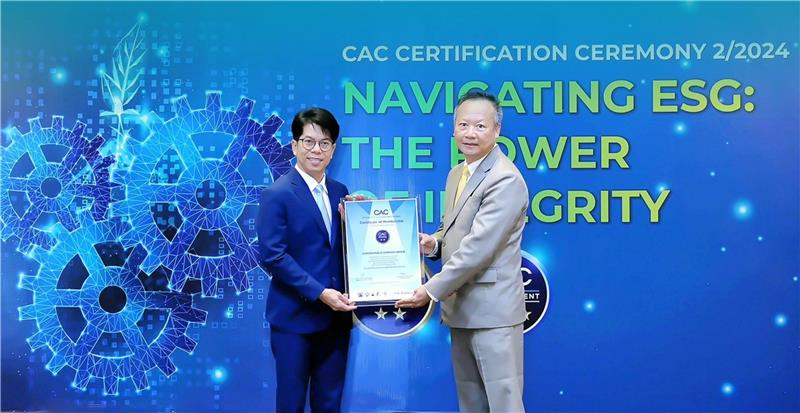
| Thai Private Sector Collective Action Against Corruption: CAC | Y |
| United Nations Global Compact (UNGC) | |
| Participation of anti-Corruption networks and initiatives |
Material Changes & Developments in CG
Reviewed the CG Policy or Board Charter in the Past Year
Yes
Material Changes or Developments in the Past Year
Yes
Policy Review — Description
The Board of Directors and its sub-committees have continuously reviewed the policies, practices, and corporate governance systems to enhance the Company's governance standards, ensuring transparency and alignment with business changes as well as relevant regulations. This process includes an annual review covering the charters of the Board of Directors and its sub-committees, the Corporate Governance Policy based on good governance principles for listed companies, and applicable rules and laws. Furthermore, the review process also considers alignment with international practices and best practices established by relevant authorities, supporting sustainable business operations and building trust with stakeholders.
In the past year, the Company has reviewed and revised the following policies, practices, and corporate governance frameworks:
Board of Directors Charter and Sub-committee Charters
Corporate Governance Policy
Risk Management Policy
Schedule of Authority
Implements the CG Code for Listed Companies
No
CG Code — Description
The Company has adopted the principles of good corporate governance for listed companies, or the Corporate Governance Code (CG Code), issued by the Office of the Securities and Exchange Commission (SEC), and has applied them in a manner appropriate to the nature of its business. In 2025, however, there were certain practices that the Company had not fully complied with, as detailed below.
The CG Code recommends that the Board of Directors should consist of no fewer than 5 directors and should not exceed 12 directors.
Currently, the Company has a total of 17 directors, as this number is considered appropriate for the type, size, and complexity of the business, which requires the inclusion of experts from diverse fields. Although the number of directors exceeds the recommended guideline, the Company places importance on good corporate governance in all aspects and regularly reviews the number and structure of the Board, and remains prepared to make adjustments as appropriate in the future.
The CG Code also recommends that independent directors should not serve for more than nine consecutive years from the date of their first appointment as independent directors, without exception.
Currently, the Company has a policy that independent directors shall serve for no more than nine consecutive years from the date of their first appointment as independent directors. However, the Board of Directors may consider proposing the reappointment of such independent directors if, after careful consideration of their qualifications, knowledge, expertise, experience, as well as the necessity and benefits to the Company’s business operations, it deems such reappointment appropriate. In 2025, none of the Company’s independent directors had served for more than nine consecutive years.
The CG Code further recommends that the Board should consider appointing an external consultant to assist in establishing guidelines and providing recommendations for the evaluation of the Board’s performance at least once every three years, and disclose such implementation in the Company’s annual report.
The Company has not yet appointed an external consultant for this purpose nor disclosed such implementation in the annual report. Nevertheless, the Board of Directors and its sub-committees conduct performance evaluations annually, both collectively and individually. This process is considered a shared responsibility of all directors and serves as an important tool to enhance the effectiveness of the Board’s performance. Each director independently provides opinions and conducts self-assessments, and the Company uses the evaluation results as a guideline for improving and developing the Board’s performance. The criteria and evaluation process have been fully disclosed in the Company’s annual report.
Other CG Performance & Outcomes
The Company continuously reviews and enhances its policies and practices in accordance with the principles of good corporate governance on an annual basis to ensure alignment with both national and international governance standards. These include the Corporate Governance Code (CG Code) issued by the Office of the Securities and Exchange Commission (SEC), as well as the criteria under the Corporate Governance Report of Thai Listed Companies (CGR) conducted by the Thai Institute of Directors (IOD). In 2025, the Company received corporate governance assessment results with the following key highlights:
Domestic Recognitions
Received a 5-star rating, or “Excellent,” for the fifth consecutive year under the Corporate Governance Report of Thai Listed Companies conducted by the Thai Institute of Directors (IOD)
Achieved a full score of 100 points in the Annual General Meeting (AGM) Checklist assessment conducted by the Thai Investors Association (TIA)
Recognized as a Sustainable Stock under the SET ESG Ratings for the fifth consecutive year, receiving an AAA rating from the Stock Exchange of Thailand in 2025
Certified as a member of the Thai Private Sector Collective Action Against Corruption (CAC) by the Thai Institute of Directors
International Recognitions
Received the ASEAN Asset Class PLCs award for the second consecutive year under the ASEAN Corporate Governance Scorecard (ACGS)
Recognized as an Industry Mover in the global beverage industry and included in the S&P Global Sustainability Yearbook 2025 based on the assessment by S&P Global